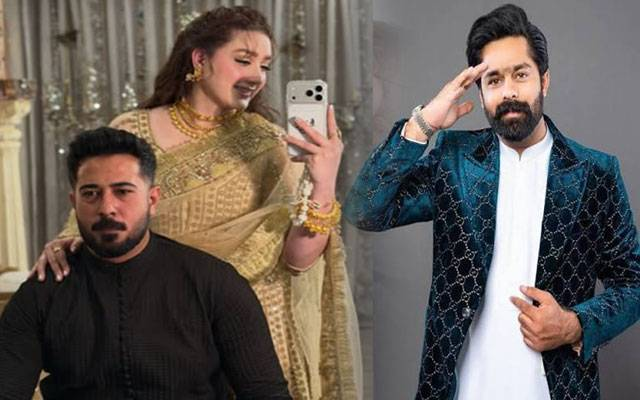

The controversy surrounding Pakistani actress Momina Iqbal and Punjab lawmaker Saqib Chadhar has taken another turn after Momina’s husband, Hamza Habib, publicly challenged Chadhar’s claim that an Instagram account shown in actress Aruba Mirza’s screenshots was fake.
Hamza responded by sharing what he described as timeline-based evidence, questioning the explanation provided by the MPA and criticizing his comments regarding women’s dignity and online conduct.
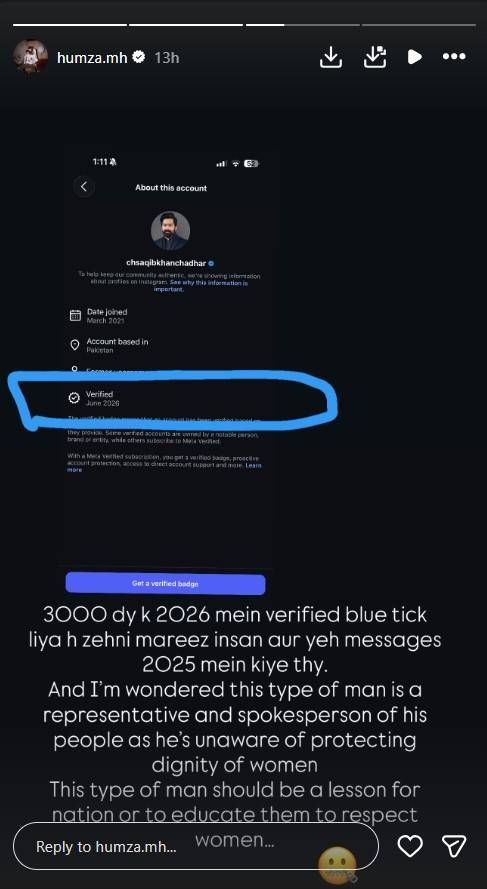
Taking to Instagram Stories, Hamza shared a screenshot of Saqib Chadhar’s Instagram profile and pointed out that the account received a Meta Verified blue tick in June 2026. He argued that the direct messages shared by Aruba Mirza were allegedly from 2025, before the account received verification.
In his post, Hamza questioned how the account could be dismissed as fake when the same profile later obtained verification. He suggested that a verification badge received in 2026 does not remove or invalidate activity that allegedly occurred through the account in previous years.
Hamza also criticized Chadhar’s response to the controversy, saying that public representatives should demonstrate responsibility and respect toward women. He emphasized that elected officials are expected to set positive examples for society through their conduct and statements.
The latest development follows actress Aruba Mirza’s decision to share screenshots that she claimed showed repeated attempts to contact her through Instagram direct messages. In her statement, Aruba also expressed support for fellow actresses Momina Iqbal and Syeda Tauba, describing the situation as a reflection of concerns surrounding the behavior of influential figures.
The controversy is connected to an ongoing legal dispute involving Momina Iqbal and Saqib Chadhar. Momina had previously accused the Punjab lawmaker of cyber harassment, blackmail, and online intimidation. A case was registered under the Prevention of Electronic Crimes Act (PECA), and the matter remains under legal proceedings.
Saqib Chadhar has denied the allegations and rejected claims associated with the screenshots circulating online. He maintained that the account shown in the screenshots was fake and unrelated to him. He also dismissed the accusations against him and responded to the criticism by defending his position.
The dispute has gained significant attention on social media, with discussions focusing on digital accountability, online harassment allegations, and the responsibilities of public figures. As both sides continue presenting their positions, the matter remains subject to legal review and further developments.
Cases involving online harassment and alleged misuse of digital platforms have become increasingly prominent in Pakistan, highlighting the importance of proper investigation, evidence verification, and legal procedures when addressing such claims.
While Hamza Habib’s statements have added a new dimension to the controversy, the final outcome will depend on the findings of the relevant authorities and the ongoing legal process.